As the owner of JP Fence, I know homeowners and businesses in Northern Nevada want fence designs that do more than look good. A fence has to solve real problems: privacy, security, containment, wind resistance, and long-term durability in our climate. Northern Nevada’s sun exposure, high winds, and uneven terrain require careful planning. The best designs come from understanding how the environment interacts with each material and style. When done properly, a fence enhances the property today and performs reliably for years.
Sun exposure in Northern Nevada is intense enough to degrade inferior materials within just a few seasons. Finishes break down, boards dry out, and low-quality vinyl becomes brittle. That is why every design we build starts with selecting materials and coatings that stand up to UV exposure and sharp temperature swings. A fence should maintain both structure and appearance without constant repairs.
Wind is one of the biggest structural challenges. Many neighborhoods, from Spanish Springs to Carson Valley, sit in open corridors where gusts hit with tremendous force. The taller the fence, the more wind it carries. A sound design requires posts set deep enough to resist uplift, rails spaced to distribute pressure, and frames engineered to prevent sections from bowing or leaning. Experience matters greatly here. Most repair calls we receive involve fences that failed not because the material was weak, but because the design never accounted for Northern Nevada winds.
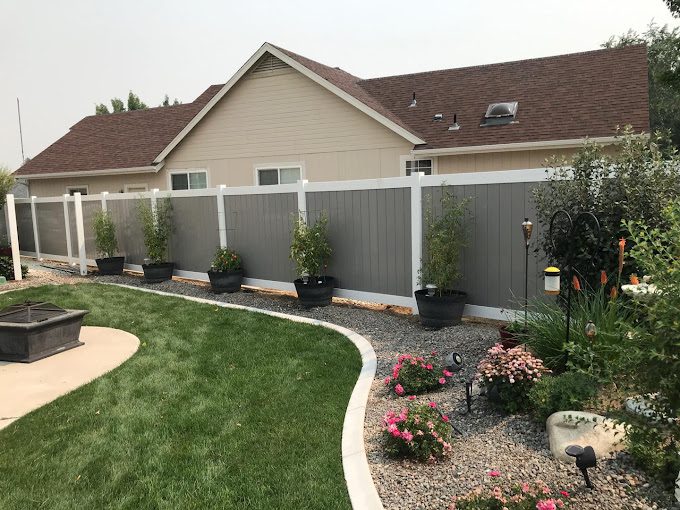
Terrain is another factor that distinguishes our region. Few properties sit on a perfectly level grade. A fence must follow slopes without leaving gaps at the bottom or creating awkward steps that disrupt appearance. We use racking and stepping techniques depending on the steepness and soil composition. Properly designed, a fence flows naturally with the land, avoids binding gates, and maintains consistent spacing along the entire line. Homeowners appreciate the finished look, but the real value comes from long-term stability and function.
Durability and maintenance expectations also influence design. Wood offers a warm, classic look but requires sealing. Vinyl and composites maintain their finish with little upkeep. Metal resists warping and handles wind exceptionally well. Each material has strengths when paired with the right application. The key is aligning material choice with lifestyle and property needs.
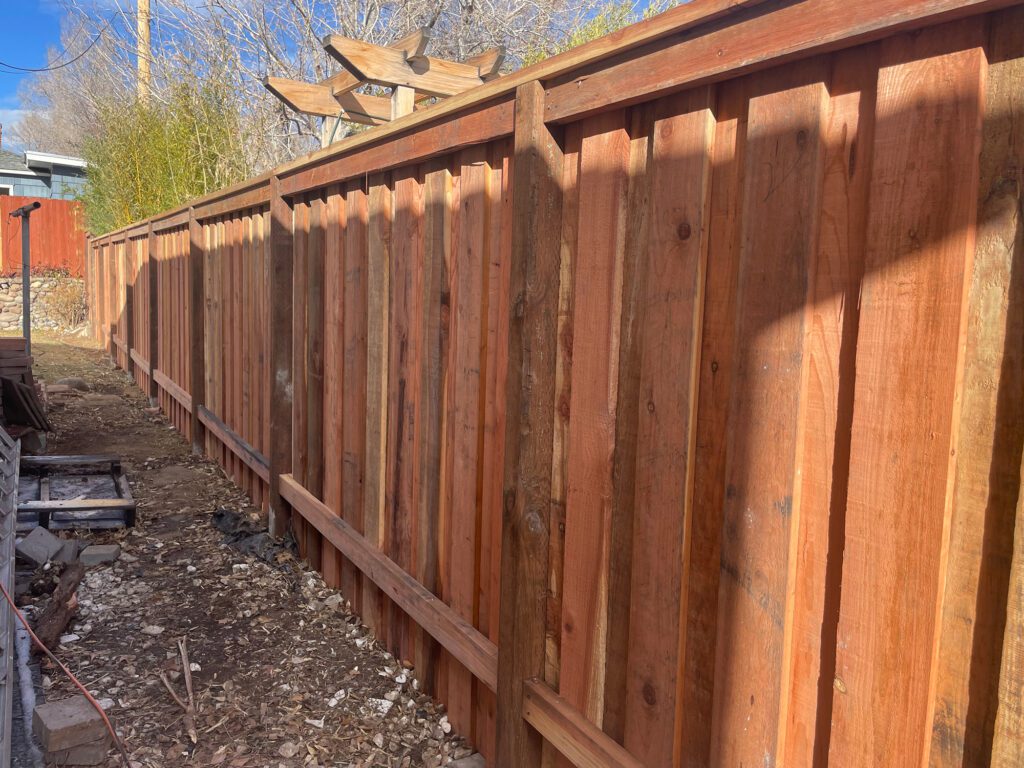
Wood remains a popular choice because it provides strong privacy and blends well with both modern and rustic homes. It works especially well in large backyard settings where homeowners want full enclosure. When sealed properly, wood performs well in our dry climate, though it will require periodic maintenance to retain color and prevent shrinking.
Vinyl offers a clean, uniform look that doesn’t fade quickly in the Nevada sun when manufactured and installed correctly. For homeowners who want a polished appearance without ongoing staining or painting, vinyl remains one of the more worry-free solutions. It holds up well in front yards where presentation matters and maintenance needs to be minimal.
Metal fencing brings strength that few other materials match. It defines boundaries clearly while allowing visibility, making it ideal for front yards or properties overlooking scenic views. Powder-coated finishes prevent rust in dry climates and ensure the fence maintains its appearance even after years of exposure. Businesses appreciate metal for its security and longevity, but homeowners value it for its timeless, low-maintenance durability.
Ornamental steel or iron adds a decorative element without sacrificing safety. These designs elevate curb appeal and create character at the entry to a home. They also retain their structure far better than lightweight aluminum alternatives, especially in windy areas.
Composite materials offer the look of wood without the upkeep. They resist warping, shrinking, and fading, making them an excellent choice for homeowners who want long-term reliability with a natural aesthetic. As Northern Nevada continues to expand, composites have become one of the fastest-growing choices for premium residential fencing.
Chain link remains highly practical for large perimeters, pet containment, and commercial sites. It is cost-effective, durable, and easy to maintain. Privacy slats or screens can be added when needed, and industrial-grade variants withstand demanding use.
Custom combinations allow homeowners to pair the best characteristics of each material. Wood inserts inside steel frames, for example, add warmth while ensuring the structure never sags. These hybrid designs perform especially well on sloped yards or wide spans where strength matters.
The best-looking fence fails if it doesn’t accomplish its purpose. That is why every project begins with clarifying needs. Privacy fences eliminate sightlines into backyards, pool areas, patios, and side yards where families want seclusion. Security-focused designs reinforce boundaries, deter access, and control entry around equipment yards, RV parking, and high-traffic areas. Families with pets or small children need fences that prevent climbing, contain active animals, and secure play areas.
Each property has a primary function that drives height, spacing, and material selection. A four-foot ornamental fence suits a front yard but cannot provide privacy or prevent a large dog from jumping. A six-foot solid panel works well for a backyard but may overpower the home visually if used incorrectly at the front. By identifying purpose first, we avoid mismatches between design and expectations.
Some properties require specific accommodations. Pool areas must meet safety codes for gate operation and spacing. Commercial lots need fences that resist tampering and minimize maintenance. RV parking benefits from wide, reinforced gates that handle repeated opening and closing without sagging. Understanding these practical needs ensures the final design is both attractive and functional.
Height affects both visibility and wind load. Choosing the right height keeps the fence compliant with HOA rules and ensures performance in wind-prone areas. Spacing influences privacy, airflow, and overall aesthetics. Solid panels create full privacy, while semi-private or open designs work well in front areas where airflow and sightlines matter.
Post construction is the foundation of any quality fence. Deep-set posts anchored in concrete prevent movement and sagging. Rails and framing distribute force evenly, allowing the fence to stand firm through storms and seasonal changes. Gates require even more precision because they carry weight and move frequently. Proper alignment, strong hinges, and accurate leveling ensure they function reliably.
Finishes complete the design and determine how the fence ages. Stained wood protects against dryness and cracking. Powder-coated metal resists fading and corrosion. Vinyl and composite boards maintain color without extra treatment. When materials and finishes match the environment, the fence maintains its appearance instead of degrading prematurely.
At JP Fence, we design the entire system intentionally: from the first post to the final latch, so the finished product looks unified, functions smoothly, and withstands the realities of Northern Nevada’s climate. Homeowners receive a fence tailored to their property, not a generic solution.
If you are planning a fence for privacy, security, style, or all three, we are ready to help. Contact JP Fence to begin designing a fence that fits your property, performs in our climate, and enhances your home for years to come.
As the owner of JP Fence, I’ve seen firsthand how much impact a well-built custom gate has on a property. It is the first feature visitors notice, the last line of security for your home, and one of the most effective upgrades for privacy. Off-the-shelf gates rarely meet the demands of Northern Nevada’s climate or the unique layouts of local properties. Custom gates, on the other hand, solve specific functional needs while adding strong visual appeal. Homeowners choose them because they perform better, last longer, and create a finished look that standard panels simply cannot match.
Privacy is the most common reason homeowners call us for custom gates. Many neighborhoods in Reno, Sparks, and the surrounding valleys sit close to busy streets or elevated viewpoints. A properly designed gate blocks direct sightlines into yards, patios, pool decks, or RV parking areas. The difference is immediate: yards feel more secure, and families gain a sense of comfort knowing their outdoor spaces are shielded. Because every opening is different, custom fabrication eliminates gaps and misalignment that often appear with prefabricated panels.
Curb appeal is another driving force. A thoughtfully designed gate elevates the entire property. It frames the entrance, ties together the fencing style, and reinforces the architectural look of the home. Whether the property leans modern, rustic, or traditional, the right gate becomes an asset that adds character and noticeable resale value. In neighborhoods where many homes share similar layouts, a custom gate is one of the easiest ways to stand apart while still fitting within local aesthetics.
Safety plays an equally important role. Homeowners trust custom gates to keep pets and children within secure boundaries, especially near busy roads or open desert areas where wildlife is common. Gates also protect access points such as pool areas and side yards. When driveway openings need to accommodate trailers, UTVs, RVs, or work vehicles, a custom design ensures the gate functions smoothly without forcing awkward maneuvering or compromising strength.
Northern Nevada’s high UV exposure and dry climate can break down weak materials quickly. Thin metal flexes, low-quality wood dries and splits, and unprotected coatings fade in just a few seasons. A custom gate built correctly, however, uses UV-resistant finishes, heavier-gauge steel, and framing designed to resist thermal expansion. These choices preserve both appearance and function year after year.
Wind is one of our biggest challenges. Many neighborhoods sit in open basins or elevated foothills where gusts hit with significant force. Gates that aren’t reinforced properly start to rack, twist, or loosen at the hinges. Our builds rely on deep-set posts, secure welds, and hinge hardware rated for heavy use. When installed well, a gate stands firm through storms without drifting off alignment.
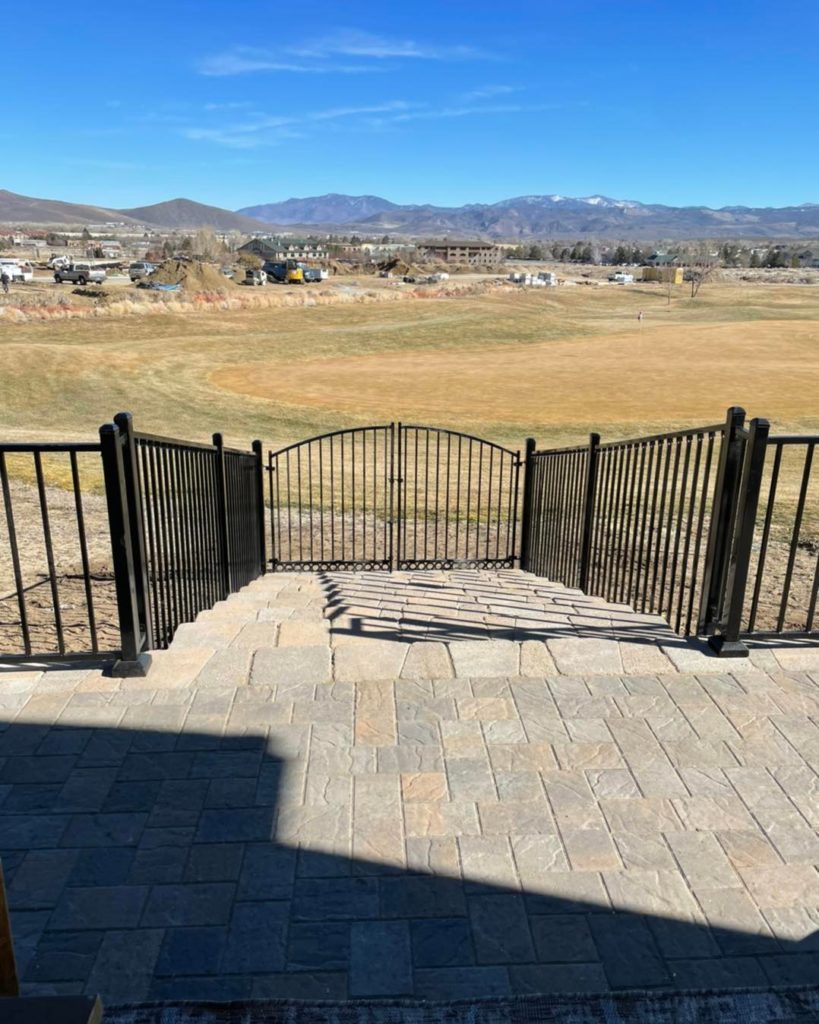
Sloped terrain is another regional reality. A gate installed on uneven ground must be measured and built specifically for the grade. This involves designing the swing path so the gate clears the ground smoothly and closes without strain. Adjustments in frame geometry, hinge selection, and latch placement ensure the gate operates reliably despite the slope. These details preserve long-term performance and prevent the dragging or binding that homeowners often see with mass-produced options.
Gate sag is the number one complaint we hear from homeowners who inherited builder-grade gates. Sagging happens because the gate was never engineered for its width or weight. At JP Fence, we approach every gate structurally. Proper framing distributes weight evenly, and diagonal bracing prevents the frame from relaxing over time. Heavy-duty hinges support the load without bending, and concrete-set posts anchor the gate firmly against movement.
Driveway gates benefit from additional engineering. Some need cantilever systems, while others call for ground wheels or extra hinge reinforcement. These choices depend on weight, width, and terrain. When built correctly, a gate remains level and easy to operate for decades, not just the first year.
Modern horizontal slat designs have become incredibly popular in Reno and Sparks. Homeowners appreciate the clean lines, strong privacy, and contemporary feel. These designs pair well with stucco, modern farmhouse builds, and newer subdivisions looking for a sleek aesthetic. The spacing allows airflow without sacrificing privacy.
Ranch-style gates remain the top choice for properties with acreage. Their wide openings and open-frame designs suit rural driveways and blend naturally into the landscape. Strength and visibility make them a reliable choice for wind-exposed lots.
Ornamental iron continues to appeal to homeowners who want a more decorative entrance. The detailed metalwork adds character without compromising security. Powder-coated finishes withstand Northern Nevada’s dry climate and prevent rust in areas where snow and road treatments might otherwise corrode unprotected metal.
Mixed-material gates using both wood and steel have become a favorite for homeowners wanting warmth without sacrificing durability. Wood produces a welcoming, natural look, while the steel frame provides long-term stability. This style fits both modern and rustic homes, making it one of the most versatile options we offer.
Matching the gate to the fence is another trend that continues to grow. When the gate is designed as part of a complete system rather than an afterthought, the entire yard gains a unified appearance. This cohesion significantly improves curb appeal.
Different designs serve different functions. Urban lots benefit most from modern slats because they maximize privacy while maintaining airflow. Larger rural properties rely on ranch-style configurations for wide access and durability. Homes in visible front-facing areas often choose ornamental iron because it provides security without obstructing visibility toward the driveway or street.
As the business owner, I always advise homeowners to think about long-term use rather than just appearance. Consider vehicle access, pet safety, prevailing wind direction, and sun exposure. When these factors guide the design, the result is a gate that performs flawlessly and continues to look good years later.
Homeowners increasingly request reinforced frames and upgraded hinges because they provide long-term stability. These components prevent forced entry attempts, resist warping, and hold up to daily use. Lockable latches improve side-yard and backyard privacy without creating unnecessary hassle, and taller panel options enhance privacy where needed.
For driveway gates, automated entry systems offer unmatched convenience. Keypad access, remote openers, sensor systems, and smart-home integration allow controlled access without leaving your vehicle. These systems operate reliably in local weather conditions when installed with the right equipment.
Custom gates require more than fabrication; they require an understanding of how Northern Nevada’s climate, terrain, and architectural styles influence performance. As a local business owner, I’ve built and installed gates across every type of property in the region. Our team approaches each project with precision, focusing on durability, smooth operation, and design consistency with the home. We use proven construction techniques, quality materials, and accurate measurements to ensure every gate performs as beautifully as it looks.
A gate should enhance privacy, strengthen security, and elevate curb appeal without causing headaches down the road. JP Fence delivers gates built specifically for Northern Nevada and the people who live here.
If you’re ready to upgrade your property with a custom gate that fits your needs and stands strong for years, contact JP Fence. We help homeowners choose designs that match their home, handle our climate, and deliver lasting value.
Planning and installing a fence can transform your property by adding security, defining boundaries, and enhancing curb appeal. It’s a significant investment that requires careful thought about materials, timing, and local regulations to avoid costly mistakes. I want to share what I’ve learned about the fence installation process here in Northern Nevada, focusing on practical details that help homeowners and businesses make the best choices. Whether you’re protecting your family, adding privacy, or improving aesthetics, understanding your options will lead to a more satisfying outcome.
Professional fence installation delivers benefits beyond just putting up panels and posts. A well-installed fence adds value to your property by improving security and boosting curb appeal that stands the test of time. Cutting corners or attempting DIY installation can lead to premature damage from local climate conditions or improper anchoring, which risks safety and costlier repairs later.
Getting a fence the right way ensures it fits your property lines correctly, looks good, and functions exactly as needed. It’s important to choose a contractor who understands the unique demands of the Northern Nevada environment—from soil conditions to seasonal weather patterns. Investing in professional expertise means the project is done right the first time, saving headaches and securing your property effectively.
The initial investment in expert installation often pays off through durability and reduced maintenance. A quality fence withstands wind, wildlife, and weather for years without frequent repairs. Ultimately, a strong, well-crafted fence offers peace of mind, knowing your property is both attractive and protected.
Choosing fencing materials means balancing function, appearance, and local climate effects. Popular options include vinyl, wood, chain link, and wrought iron—each offering distinct advantages. Vinyl resists weather and requires little upkeep, wood provides a classic look with natural warmth, chain link offers affordability and security, while wrought iron adds elegance and strength.
Climate considerations are especially important in Northern Nevada, where wind and sun exposure can impact durability. For example, wood fences need proper sealing to resist dryness and splitting, while metal fences require coatings to prevent rust. Thinking about how wildlife interacts with your property also influences material choice, especially in rural or semi-rural areas.
Designs should align with your fence’s intended purpose. Privacy fences benefit from solid panels, while decorative fences work well for defining space without blocking views. Understanding these factors helps ensure your fence stands up to the environment while meeting your needs for security, privacy, and style.
Navigating permitting and zoning regulations is a crucial step before any fence installation. Local rules often dictate fence height, placement, and materials to maintain neighborhood safety and aesthetics. In Northern Nevada, requirements can vary by city or county, so consulting the local building department early saves time and prevents compliance surprises.
Most fencing projects require permits, especially for new installations or significant modifications. Obtaining these permits demonstrates adherence to safety standards and municipal codes, avoiding fines or forced removals that can derail your project. A knowledgeable contractor will handle permit applications and ensure compliance with all relevant laws.
Fence height limits typically range around 6 feet for front yards and 8 feet in backyards but can differ depending on your location and zoning. Property lines and homeowner association rules also play a role. Partnering with a contractor familiar with local regulations simplifies this process and gives you confidence your fence will meet all legal standards.
Hiring a licensed and experienced fencing company guarantees a streamlined installation process from start to finish. Professionals bring the right tools, expertise, and local knowledge that make a significant difference in quality and project timeline. Choosing contractors with proper licensing and insurance protects you from liability and ensures adherence to building codes.
Experienced installers understand the soil conditions, weather factors, and regulatory requirements unique to Northern Nevada. This insight helps prevent common pitfalls like improperly set posts or unsuitable materials. Their reputation for completed projects offers assurance regarding durability and craftsmanship.
Working with a local, licensed contractor also means better communication and accountability. They are invested in maintaining a strong business reputation in the community and committed to your satisfaction. This relationship promotes transparency, timeliness, and long-lasting results you can trust.
Embarking on a fence installation project involves several important decisions—from selecting materials suited to Northern Nevada’s climate to understanding permitting requirements and hiring the right contractor. Each element contributes to a finished fence that enhances your property’s security, value, and visual appeal. Thorough planning and professional installation pave the way for a durable, attractive fence that meets your needs now and for years ahead.
If you’re ready to move forward with your fence project or want to discuss options tailored to your property, please call or fill out the form to schedule an estimate or site visit. Taking this step connects you with local experts who are committed to guiding you through every stage, ensuring a successful outcome with JP Fence." >Comprehensive Guide to Professional Fence Installation in Northern Nevada
Planning and installing a fence can transform your property by adding security, defining boundaries, and enhancing curb appeal. It’s a significant investment that requires careful thought about materials, timing, and local regulations to avoid costly mistakes. I want to share what I’ve learned about the fence installation process here in Northern Nevada, focusing on practical details that help homeowners and businesses make the best choices. Whether you’re protecting your family, adding privacy, or improving aesthetics, understanding your options will lead to a more satisfying outcome.
Why Professional Fence Installation Matters
Professional fence installation delivers benefits beyond just putting up panels and posts. A well-installed fence adds value to your property by improving security and boosting curb appeal that stands the test of time. Cutting corners or attempting DIY installation can lead to premature damage from local climate conditions or improper anchoring, which risks safety and costlier repairs later.
Getting a fence the right way ensures it fits your property lines correctly, looks good, and functions exactly as needed. It’s important to choose a contractor who understands the unique demands of the Northern Nevada environment—from soil conditions to seasonal weather patterns. Investing in professional expertise means the project is done right the first time, saving headaches and securing your property effectively.
The initial investment in expert installation often pays off through durability and reduced maintenance. A quality fence withstands wind, wildlife, and weather for years without frequent repairs. Ultimately, a strong, well-crafted fence offers peace of mind, knowing your property is both attractive and protected.
Choosing fencing materials means balancing function, appearance, and local climate effects. Popular options include vinyl, wood, chain link, and wrought iron—each offering distinct advantages. Vinyl resists weather and requires little upkeep, wood provides a classic look with natural warmth, chain link offers affordability and security, while wrought iron adds elegance and strength.
Climate considerations are especially important in Northern Nevada, where wind and sun exposure can impact durability. For example, wood fences need proper sealing to resist dryness and splitting, while metal fences require coatings to prevent rust. Thinking about how wildlife interacts with your property also influences material choice, especially in rural or semi-rural areas.
Designs should align with your fence’s intended purpose. Privacy fences benefit from solid panels, while decorative fences work well for defining space without blocking views. Understanding these factors helps ensure your fence stands up to the environment while meeting your needs for security, privacy, and style.
Navigating permitting and zoning regulations is a crucial step before any fence installation. Local rules often dictate fence height, placement, and materials to maintain neighborhood safety and aesthetics. In Northern Nevada, requirements can vary by city or county, so consulting the local building department early saves time and prevents compliance surprises.
Most fencing projects require permits, especially for new installations or significant modifications. Obtaining these permits demonstrates adherence to safety standards and municipal codes, avoiding fines or forced removals that can derail your project. A knowledgeable contractor will handle permit applications and ensure compliance with all relevant laws.
Fence height limits typically range around 6 feet for front yards and 8 feet in backyards but can differ depending on your location and zoning. Property lines and homeowner association rules also play a role. Partnering with a contractor familiar with local regulations simplifies this process and gives you confidence your fence will meet all legal standards.
Hiring a licensed and experienced fencing company guarantees a streamlined installation process from start to finish. Professionals bring the right tools, expertise, and local knowledge that make a significant difference in quality and project timeline. Choosing contractors with proper licensing and insurance protects you from liability and ensures adherence to building codes.
Experienced installers understand the soil conditions, weather factors, and regulatory requirements unique to Northern Nevada. This insight helps prevent common pitfalls like improperly set posts or unsuitable materials. Their reputation for completed projects offers assurance regarding durability and craftsmanship.
Working with a local, licensed contractor also means better communication and accountability. They are invested in maintaining a strong business reputation in the community and committed to your satisfaction. This relationship promotes transparency, timeliness, and long-lasting results you can trust.
Embarking on a fence installation project involves several important decisions—from selecting materials suited to Northern Nevada’s climate to understanding permitting requirements and hiring the right contractor. Each element contributes to a finished fence that enhances your property’s security, value, and visual appeal. Thorough planning and professional installation pave the way for a durable, attractive fence that meets your needs now and for years ahead.
If you’re ready to move forward with your fence project or want to discuss options tailored to your property, please call or fill out the form to schedule an estimate or site visit. Taking this step connects you with local experts who are committed to guiding you through every stage, ensuring a successful outcome with JP Fence.